
Blog

Can Roof Rats Cause Plumbing Leaks in Phoenix?
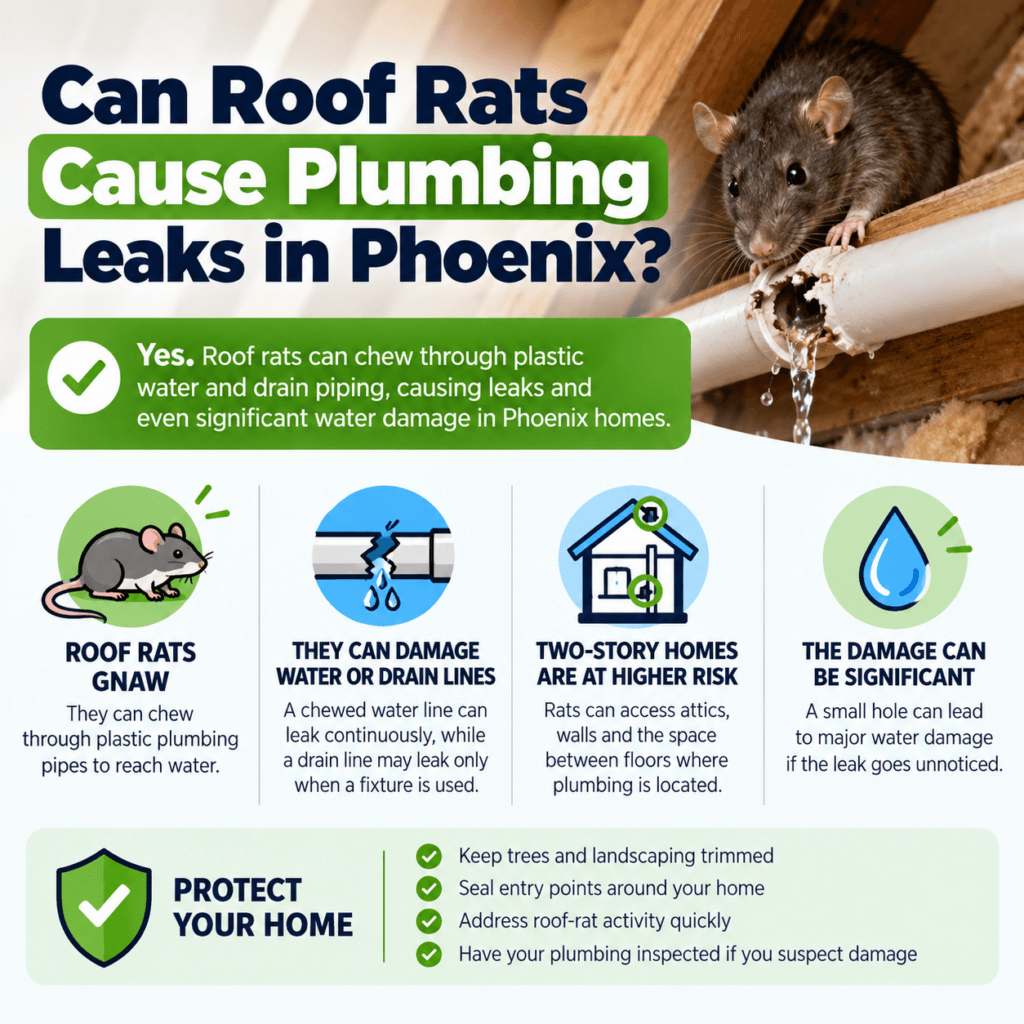
Yes. Roof rats can chew through plastic water and drain piping, causing anything from an occasional leak to significant flooding inside a Phoenix-area home. Homes with accessible plastic plumbing in attics, walls or between the floors of a two-story home can be particularly vulnerable when roof rats get inside.
At Robins Plumbing, we sometimes get called for a mysterious plumbing leak only to discover that the problem isn’t a failed fitting or an old pipe.
It’s teeth.
Roof rats are a known problem in parts of the Phoenix area, and once they get inside a home, they can cause an incredible amount of damage.
The good news is that there are things you can do to protect your home.
Are Roof Rats Really a Problem in Phoenix?
They certainly can be.
Roof rats have been documented in the Phoenix area for decades. According to the University of Arizona Cooperative Extension, roof rats were identified in a Phoenix neighborhood in 2001 and found an ideal habitat among mature citrus trees, palms and other landscaping. Maricopa County continues to provide roof-rat resources for Valley homeowners.
And having roof rats does not mean you have a dirty home.
Roof rats are looking for the same basic things most pests are looking for: food, water and shelter.
Phoenix neighborhoods with mature landscaping and abundant fruit trees can be particularly attractive. Maricopa County lists citrus, pomegranates, figs, nuts, seeds and Queen Palm fruit among their food sources. Roof rats are also excellent climbers and can travel along trees, vines, fences, power lines and roofs.
That means a beautiful, well-maintained neighborhood can still be a great neighborhood for a roof rat.
Why Do Roof Rats Damage Plumbing?
Roof rats gnaw. Unfortunately, plastic plumbing isn’t immune.
Maricopa County specifically warns that roof rats can chew through plastic and even metal pipes to reach water. They can also chew wood, drywall, aluminum siding and coverings on electrical wires.
For plumbing, we are particularly concerned about accessible plastic piping.
Depending on the age of your Phoenix-area home and how it was constructed or repiped, that can include plastic water piping as well as plastic drain, waste and vent piping.
Once roof rats are living in an attic, wall cavity or space between floors, exposed plumbing can become vulnerable.
Why Can Roof Rats Cause So Much Water Damage?
There is a big difference between damage to a pressurized water line and damage to a drain line.
A pressurized water line contains water continuously. If a roof rat chews a hole through that line, water can continue escaping until the home’s water supply is shut off.
If no one notices the leak — especially while you’re at work, away for the weekend or out of town — a relatively small hole can become a very large flooding problem.
A damaged drain line usually behaves differently. Because a drain isn’t constantly filled with pressurized water, you may notice leaking only when that particular plumbing fixture is being used.
That difference gives us an important diagnostic clue.
| What you’re experiencing | Possible source |
| Water leaking continuously | Pressurized water line |
| Leak appears when an upstairs sink, shower, tub or toilet is used | Drain or waste line |
| Water staining appears below an upstairs bathroom | Water or drain piping between floors should be investigated |
| Leak begins unexpectedly with known roof-rat activity | Rodent damage should be considered as a possible cause |
These symptoms don’t prove you have roof-rat damage. There are many other reasons plumbing can leak. But if you’ve heard activity in the attic or walls, found droppings or know roof rats are active in your neighborhood, it’s information your plumber should know.
Why Are Two-Story Phoenix Homes a Concern?
Two-story homes add another potential hiding place: the space between the first and second floors.
Water lines and drain piping serving upstairs bathrooms, laundry rooms and other fixtures may travel through these areas.
If roof rats gain access to that space, finding the damaged pipe can be challenging because the plumbing isn’t visible.
One clue we frequently see is a seemingly random leak from upstairs to downstairs.
If it leaks only when a particular fixture is used, we start thinking about the drain system.
If it leaks constantly regardless of whether fixtures are being used, a pressurized water line becomes a greater concern.
That’s speaking homeowner: you don’t need to know exactly which pipe is leaking before you call us. Tell us when it leaks, where you see the water and what plumbing was being used when it happened. Those details can help us narrow down the problem.
What Should I Do if a Roof Rat Chewed Through My Plumbing?
First, stop the active leak.
If a pressurized water line is leaking and you have a functioning main water shutoff at the house, shut off the water. If you cannot safely stop the water, call a plumber immediately.
Then address both sides of the problem.
Fixing the pipe without eliminating the roof rats leaves your plumbing vulnerable to another attack. Eliminating the rats without repairing damaged plumbing obviously doesn’t fix the leak.
You may need both a qualified pest-control professional and a plumber.
Your pest-control professional can determine how the rodents are getting into the home and develop a plan for removal and exclusion. Your plumber can locate the damaged piping, repair the immediate leak and evaluate whether additional exposed plumbing is vulnerable.
Should Plastic Water Lines in the Attic Be Replaced After Roof Rat Damage?
Sometimes replacing accessible plastic piping with a more rodent-resistant material should be considered, particularly when there has been repeated damage.
For example, if a home has plastic water lines running through an attic where roof rats have established themselves, simply repairing one chewed section may not eliminate the risk to the remaining accessible pipe.
One option we may discuss is replacing vulnerable attic runs with copper piping.
That does not automatically mean repiping the entire house.
If the plumbing inside the walls isn’t accessible to the rats, it may not make sense to replace it solely because one exposed attic section was damaged.
Every house is different. Our job is to show you where the vulnerability is, explain the available options and help you determine which solution makes sense for your home.
Can Roof Rats Damage Drain Lines Between Floors?
Yes. Rodents are capable of gnawing plastic materials, so accessible plastic drain piping can also be damaged.
Unlike a damaged pressurized water line, however, a hole in a drain line may only reveal itself when water and waste travel through that section of piping.
This is why a homeowner may tell us:
“It only leaks downstairs when someone takes a shower upstairs.”
Or:
“Every time we use this bathroom, we get water through the ceiling.”
Those are valuable diagnostic clues.
When we open the affected area and find gnaw marks or holes in plastic drain piping, roof-rat damage may explain what seemed like a mysterious intermittent leak.
Can You Replace Plastic Drain Pipe With Something Roof Rats Can’t Easily Chew?
In severe or recurring roof-rat situations, replacing vulnerable plastic drain piping with a more rodent-resistant material may be worth discussing.
Cast iron is one option and is generally our preferred choice when the goal is protecting vulnerable drain piping from roof-rat damage. Cast iron is extremely durable, difficult for rodents to damage and can have a very long service life when properly installed.
Copper DWV piping is another potential option because it also provides a rigid barrier that roof rats cannot easily chew through. However, copper drain piping can be susceptible to chemical deterioration and corrosion from the materials flowing through the drain system. For that reason, we would not consider copper automatically superior to cast iron simply because it doesn’t rust in the same way iron does.
Both options are considerably different from replacing damaged plastic with more plastic, and neither should automatically be considered necessary because a roof rat damaged one section of drain piping.
At Robins Plumbing, we believe in educating and empowering our clients. We’ll explain where the damage occurred, whether other accessible piping remains vulnerable, and the pros and cons of the available repair materials so you can make an informed decision for your home.
What Phoenix Neighborhoods Are More Likely to Have Roof Rats?
Rather than drawing a hard boundary around particular neighborhoods, look at the environment surrounding your home.
Mature fruit-producing landscaping can provide an excellent food source. Maricopa County specifically identifies citrus, figs, pomegranates, nuts and Queen Palm fruit as foods roof rats eat.
I learned this lesson personally.
Years ago, my neighbor moved to Phoenix from New York and brought a fig tree with him. I was thrilled when it ended up along our fence line. Fresh figs next door? Fantastic.
About a year later, I discovered something else liked the figs just as much as I did.
Roof rats.
I started seeing them running along my fence trying to get into the property. My dog decided to become our unofficial roof-rat exterminator and would catch them and drop them in the swimming pool — which created an entirely different nightmare.
The lesson stuck with me: beautiful fruit trees can also provide a food source for roof rats.
If your Phoenix neighborhood has mature citrus, figs, palms or other fruit-producing landscaping, roof-rat prevention is worth taking seriously.
How Can I Prevent Roof Rats From Damaging My Plumbing?
Prevention is by far the better solution.
Maricopa County recommends keeping roof rats out of the home in the first place by identifying and sealing potential entry points. Roof rats can enter through surprisingly small openings and can use pipes, trees, vines and other pathways to reach roofs and attics. The county also recommends removing fallen fruit and other readily available food sources.
If roof rats are common in your neighborhood, consider having a qualified pest-control company inspect and rat-proof your home before you hear scratching in the attic.
And don’t forget the landscaping. Pick ripe fruit, remove fallen fruit, eliminate unnecessary food and water sources, and keep vegetation managed where practical.
You can’t make a Phoenix home completely immune to every pest, but you can make it much less inviting.
What Are the Signs That Roof Rats May Be in My Home?
Common signs include noises or scratching in the attic or walls, droppings, gnaw marks, hollowed-out citrus or other fruit, damage to electrical-wire coverings, visual sightings along trees or power lines, and unusually agitated pets. Maricopa County also notes that attics are attractive to roof rats because they provide shelter, nesting areas and access routes into the home.
Add an unexplained plumbing leak to that list and it’s time to start investigating.
Frequently Asked Questions About Roof Rats and Plumbing
Can roof rats chew through PEX water lines?
Yes. PEX is a plastic piping material, and rodents are capable of gnawing plastic. If PEX is accessible in an attic or other area where roof rats are active, it can be vulnerable to damage.
Can roof rats chew through PVC or ABS drain pipe?
Rodents can gnaw plastic materials, so plastic drain and vent piping can be vulnerable when rats have direct access to it.
Can a roof rat cause a major flood?
Yes. If a roof rat damages a pressurized water line, water can continue escaping until the home’s water supply is shut off. An unnoticed leak can cause substantial water damage.
How can I tell whether my leak is from a water line or drain?
A pressurized water-line leak will typically continue whether you’re using a fixture or not. A damaged drain line will generally leak when water is flowing through the affected drain. A plumber can perform further testing to determine the actual source.
Should I replace all my PEX if roof rats damaged one pipe?
Not necessarily. The location of the piping, extent of the infestation, accessibility of other lines and history of repeated damage should all be considered. In some homes, replacing vulnerable attic piping may make sense without replacing plumbing concealed elsewhere.
Will fixing the plumbing solve my roof-rat problem?
No. The plumbing damage and pest infestation are separate problems. The damaged plumbing needs to be repaired, but the rats also need to be removed and their entry points addressed or additional damage may occur.
The Best Roof Rat Plumbing Repair Is the One You Never Need
Roof rats are one more reason Phoenix plumbing can’t always be treated the same as plumbing in every other part of the country.
Our climate, home construction, mature landscaping and local pests all matter.
If roof rats have already damaged your plumbing, Robins Plumbing can help identify the source of the leak, explain what was damaged and discuss repair or replacement options in plain English.
We speak homeowner. We educate and empower. And we provide a Higher Level of Service.
Because our goal isn’t simply to repair today’s leak. We want you to understand why it happened and what you can do to help prevent it from happening again.
Need a Plumber? Call a Robin!
Categories
We Specialize in All Your Plumbing Needs
Below are just a few of the services we offer.

We are licensed, bonded and insured experts here to help you with all of your residential plumbing needs.

We are licensed, bonded and insured experts here to help you with all of your commercial plumbing needs and we will get your business back up and running.

From whole home filtration systems to just having clean purified water at your kitchen sink, we're here.

You can count on us to handle your drain cleaning with quick, affordable and reliable service.