
Blog

Can Your Air Conditioner Cause Water Damage? What Phoenix Homeowners Should Know
Yes. A clogged or disconnected air conditioner condensate drain line can cause significant water damage inside your home. In Phoenix, where air conditioners work extremely hard for months at a time, condensate drainage problems can sometimes result in water appearing around ceilings, walls, or bathroom plumbing—and homeowners may understandably assume they have a plumbing leak.
At Robins Plumbing, we aren’t an air conditioning company. But we are frequently called to homes for what appears to be a plumbing leak, only to discover the water is actually coming from the air conditioning system.
That’s why we think homeowners should understand how these lines work, where they may connect to your plumbing, and what you can do to help prevent water damage.
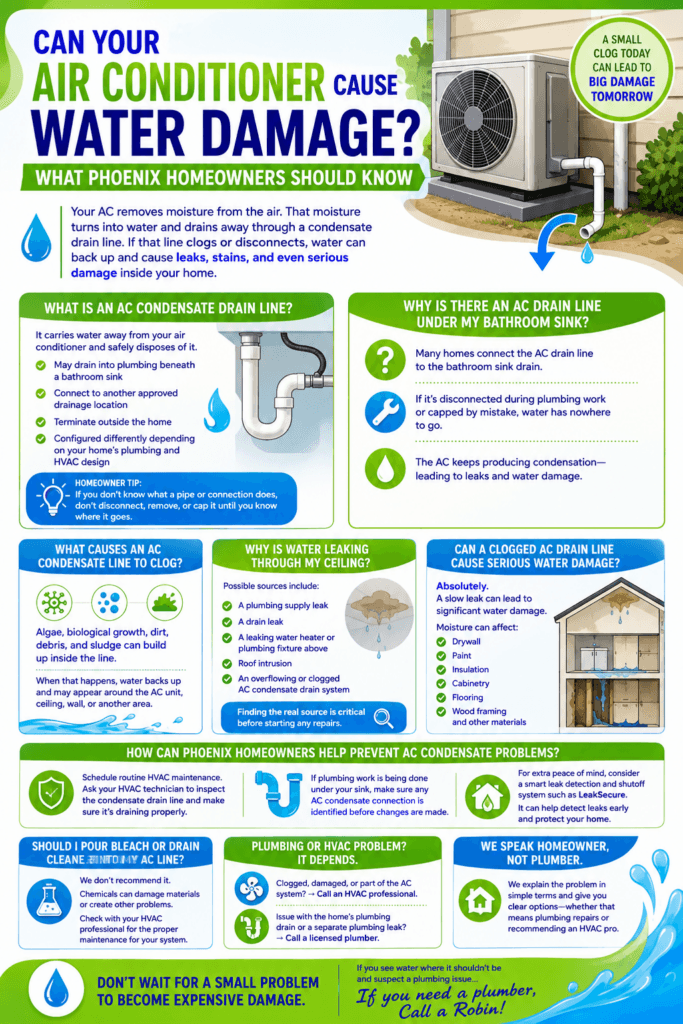
What Is an AC Condensate Drain Line?
As your air conditioner cools your home, it also removes moisture from the air. That moisture condenses into water and needs somewhere to go.
The condensate drain line carries that water away from the air conditioning unit and safely disposes of it.
Depending on how your Phoenix-area home was built and how the system was installed, the condensate line may:
- Drain into plumbing beneath a bathroom sink.
- Connect to another approved drainage location.
- Terminate outside the home.
- Be configured differently depending on the home’s plumbing and HVAC design.
This is where plumbing and air conditioning can unexpectedly meet.
Why Is There an AC Drain Line Under My Bathroom Sink?
If you’ve ever looked underneath a bathroom sink and wondered why there seems to be an extra pipe or hose connected to the drain, it may be part of your air conditioner’s condensate drainage system.
Many homeowners have no idea it’s there.
That becomes particularly important when someone replaces a bathroom sink, drain, or P-trap.
We’ve encountered situations where an AC condensate connection was disconnected during plumbing work and never reconnected—or where someone didn’t know what the line was and capped it.
The air conditioner continues producing condensation, but now that water has nowhere to drain properly.
The result can be a leak or even significant water damage.
Homeowner Tip: If you don’t know what a pipe or connection underneath your sink does, don’t disconnect, remove, or cap it until you know where it goes.
That’s part of what we mean when we say we speak homeowner, not plumber. You shouldn’t need a plumbing license to understand what’s happening inside your own home.
What Causes an AC Condensate Line to Clog?
Over time, buildup can develop inside a condensate drain line.
Potential causes include algae, biological growth, dirt, debris, and sludge. If enough material accumulates, water may no longer be able to drain properly.
Instead, it begins backing up.
Depending on the location of the air conditioning equipment and drain system, that water may eventually appear around the AC unit, ceiling, wall, or another unexpected location.
That’s often when the homeowner calls us.
Why Is Water Leaking Through My Ceiling?
Water coming through your ceiling doesn’t automatically mean a water pipe has broken.
Possible sources can include:
- A plumbing supply leak.
- A drain leak.
- A leaking water heater or plumbing fixture above the area.
- Roof intrusion.
- An overflowing or clogged AC condensate drain system.
Determining where the water is actually coming from is critical before beginning repairs.
If the source is plumbing, that’s our lane.
If we determine the source is the air conditioning system, we’ll tell you that too.
Our goal isn’t to sell you a plumbing repair you don’t need. It’s to help you understand the problem so you can make the right decision for your home.
That’s what educating and empowering our clients means to us.
Can a Clogged AC Drain Line Cause Serious Water Damage?
Absolutely.
A slow condensate leak can sometimes be more troublesome than an obvious gush of water because it may remain hidden for quite some time.
Moisture can potentially affect:
- Drywall
- Paint
- Insulation
- Cabinetry
- Flooring
- Wood framing and other building materials
Long-term moisture can also create conditions that allow microbial growth.
By the time you see a stain or water dripping through the ceiling, the problem may have been developing out of sight.
How Can Phoenix Homeowners Help Prevent AC Condensate Problems?
Prevention begins with routine HVAC maintenance.
Phoenix air conditioners work incredibly hard during our long cooling season, so your condensate drainage system deserves attention too.
When your HVAC system is serviced, ask the HVAC technician to inspect the condensate drainage system and verify that it is draining properly.
They should evaluate the system according to the manufacturer’s requirements and the configuration of your home.
And if you’re having plumbing work performed beneath a bathroom sink, make sure the plumber identifies any condensate connection before modifying the drain.
Never assume an unfamiliar pipe isn’t important.
Should I Pour Bleach or Drain Cleaner Into My AC Condensate Line?
We don’t recommend experimenting with chemicals when you don’t know exactly how your condensate system is configured.
Different HVAC systems and drain configurations may have different maintenance requirements. Some chemicals can also damage materials or create other problems.
Your HVAC professional can tell you the appropriate maintenance procedure for your particular system.
When in doubt, ask before pouring something down a drain.
Is an AC Condensate Leak a Plumbing or HVAC Problem?
It depends on where the problem is located.
If the condensate line itself is clogged, damaged, or malfunctioning as part of the air conditioning system, an HVAC professional is generally the appropriate person to call.
If the problem involves the home’s plumbing drain where the condensate line connects—or you’re experiencing a separate plumbing leak—a licensed plumber may be needed.
Sometimes it takes a little investigation to determine which one you’re dealing with.
That’s okay.
You don’t need to diagnose everything before making the call.
Frequently Asked Questions About AC Condensate Lines
Why does my AC drain into my bathroom sink?
Some homes are designed with the air conditioning condensate line connected to the bathroom sink’s drainage system. This allows condensation produced by the AC to drain through the home’s plumbing system.
What is the extra pipe under my bathroom sink?
It could be an AC condensate drain connection. Before removing or capping any unfamiliar pipe underneath a sink, have it identified by a qualified professional.
Can a clogged AC drain cause water to leak through my ceiling?
Yes. Depending on where your HVAC equipment and condensate drainage system are located, a clogged or overflowing condensate line can result in water appearing through a ceiling or wall.
Why does my bathroom sink make noise when the AC runs?
If the AC condensate line connects to the bathroom sink drain, you may occasionally hear water entering the drainage system. However, new or unusual gurgling or drainage problems should be investigated.
Who should I call for an AC condensate leak—a plumber or an HVAC company?
Problems originating with the air conditioning equipment or its condensate system generally belong to an HVAC professional. Problems involving the home’s plumbing drainage system may require a plumber. If the source isn’t obvious, a professional can help determine where the water is actually coming from.
How often should my AC condensate line be inspected in Phoenix?
Have the condensate drainage system inspected as part of your regular HVAC maintenance. Because Phoenix air conditioners experience an exceptionally demanding cooling season, keeping the system draining properly is an important part of preventing water damage.
We Speak Homeowner, Not Plumber
One of the reasons we continue creating educational resources like this is simple: an informed homeowner can make better decisions about their home.
At Robins Plumbing, we believe in educating and empowering our clients—not overwhelming them with technical terminology.
When we’re called for a leak, our job is to determine what’s happening, explain it in language that makes sense, and help you understand your options.
Sometimes that means repairing the plumbing.
Sometimes that means telling you, “This one needs an HVAC professional.”
Either way, that’s the Higher Level of Service we believe Phoenix homeowners deserve.
If you see water where it shouldn’t be and suspect you have a plumbing leak, don’t wait for a small problem to become expensive water damage.
If you need a plumber, Call a Robin!
internally link this article to your content on leak/flood prevention, main water shutoffs, leaking water heaters, and LeakSecure.
Categories
We Specialize in All Your Plumbing Needs
Below are just a few of the services we offer.

We are licensed, bonded and insured experts here to help you with all of your residential plumbing needs.

We are licensed, bonded and insured experts here to help you with all of your commercial plumbing needs and we will get your business back up and running.

From whole home filtration systems to just having clean purified water at your kitchen sink, we're here.
You can count on us to handle your drain cleaning with quick, affordable and reliable service.